
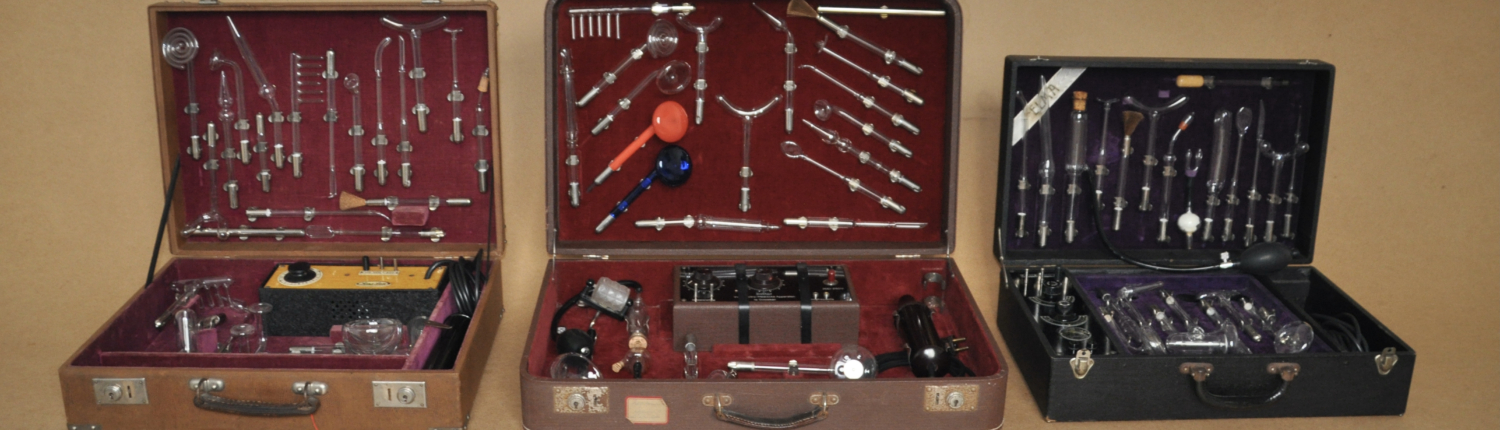
What is a Violet Ray?
A violet ray is a high-frequency electrotherapy device used in the early 20th century, producing high voltage, low current electrical stimulation through glass electrodes.
Some manufacturers continued up to the 1950s. It producesvery high voltage, very low current electrical oscillations delivered through sealed glass electrodes containing Argon or Neon gas. When operating, the gas ionises and glows while a surface discharge forms on the skin.
Historical Context
High‑frequency electrical treatment developed after late‑19th‑century research into alternating current and resonant coils. Researchers including Nikola Tesla and Paul Oudin demonstrated that rapidly oscillating currents behaved differently from earlier galvanic or faradic shocks. By the early 20th century compact home units were sold internationally.
The name “violet ray” appeared in the 1910s as a commercial term for portable high‑frequency devices marketed to both practitioners and households.
Why They Disappeared
The technology declined during the 1930s–1950s as pharmaceutical treatments and regulatory standards replaced many forms of electrotherapy. Production stopped, leaving surviving machines as historical artefacts.
What They Are Today
Modern interest focuses on: – technical restoration – electrical demonstration – collecting early electrical medical equipment – study of pre‑antibiotic therapeutic technology. They are best understood as historic electrical instruments rather than modern medical devices.

